Fashion for Good launches the Renewable Carbon Textiles Project today, bringing together a pioneering consortium to accelerate the development of Polyhydroxyalkanoates or PHA polymer fibres; a promising biosynthetic alternative to fossil based fibres with the potential to reduce carbon emissions in the fashion supply chain.
The fashion industry accounts for around 4% of global greenhouse gas emissions (GHG-e), with 38% of these emissions coming from raw material production, preparation and processing and 3% from end-of-use. Polyester fibre is one of the most widely used in the fashion industry making up 52% of global fibre production.
The production of these virgin fossil-based polyester fibres are responsible for increased greenhouse gas emissions3 and their use results in the release of microplastics into the natural environment. PHA polymers provide a bio-based, marine and soil compostable solution to fossil-fuel derived polyester fibres, and could be a possible holy grail to decarbonising the fashion industry.
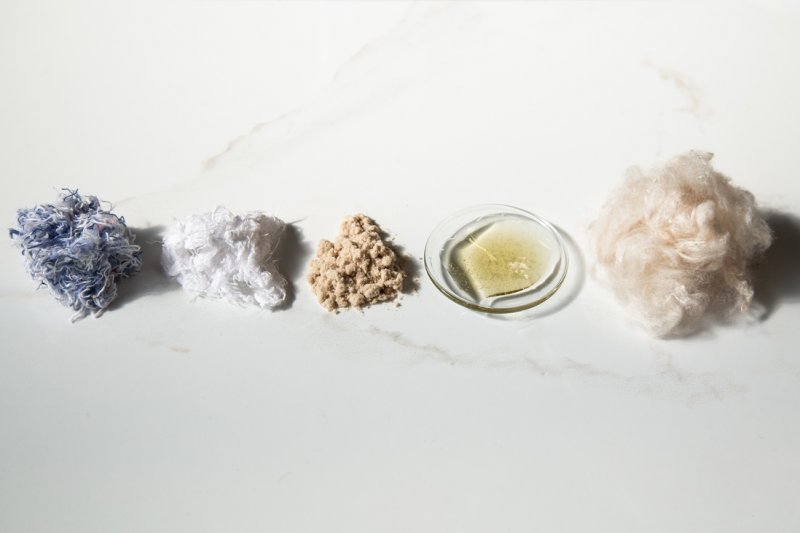
But what are PHAs and how are they made?
PHAs belong to an emerging class of biobased, marine and soil compostable polymers. They are produced through a fermentation process using various carbon-based feedstocks, including organic food waste, methane gas and captured CO2. They have a wide range of chemical, thermal and mechanical properties and can be engineered to have similar performance characteristics as conventional synthetic fibres. PHA has been used to make films and packaging products but so far there have been limited fibre applications. Alongside this, only a handful of companies currently produce PHA meaning supply is limited.
The Renewable Carbon Textiles Project is orchestrated by Fashion for Good, with catalytic funding provided by Laudes Foundation, in collaboration with partner brands BESTSELLER, Norrøna, PVH Corp., parent company of Calvin Klein and Tommy Hilfiger, and Gore, participating in testing and developing output materials, as well as providing their technical expertise and industry insights. This will enable the evaluation of the suitability of PHA polymers, accelerate fibre development and production, and determine scalability in the traditional supply chain. The end-of-use pathways for the fibres will be evaluated through third-party degradation and recyclability testing, to ensure circularity.